How to Care for a Tradescantia (Wandering Jew)
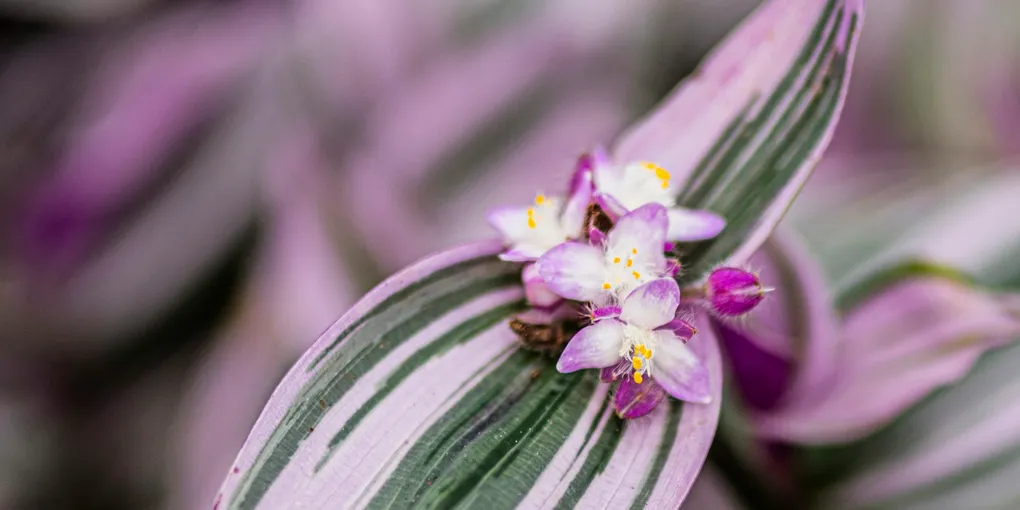
Tradescantia — commonly sold as Inch Plant or Wandering Dude (older labels say Wandering Jew), or under specific varieties like Tradescantia zebrina and T. nanouk — is a fast-growing trailing plant known for its purple and silver striped foliage. It’s an easy houseplant overall, but it’s also one where care mistakes show up fast in the plant’s color and shape, so a little attention to light and watering goes a long way toward keeping it looking its best.
Light
Give a Tradescantia bright indirect light, with a couple hours of gentle direct morning sun if you can manage it. Direct light is what keeps the purple and silver striping saturated and vivid; in low light, the color fades toward plain green and the vines stretch out with long gaps between leaves instead of growing full and compact. If your plant already looks washed out or sparse, moving it somewhere brighter is the fix.
Watering
Let the top inch of soil dry out before watering again. Tradescantia is fairly forgiving of a missed watering, but it also lets you know quickly when it’s thirsty — the leaves and stems go noticeably limp and droopy. The good news is it recovers just as fast: a thorough watering usually perks the plant back up within a few hours. What it doesn’t tolerate well is soil that stays wet, so don’t let it sit in water after you’ve watered — judge by soil feel rather than a fixed schedule.
Soil and pot
A standard, well-draining potting mix is all it needs — Tradescantia isn’t particular about soil composition. What matters more is that the pot has a drainage hole, since soggy, waterlogged soil is the most common way to lose this plant.
Humidity
Average household humidity is fine, and Tradescantia will tolerate drier air without major issues. It does appreciate higher humidity and tends to look a bit fuller and more vigorous with it, so if the leaf tips are browning and watering isn’t the cause, a humidity boost can help.
Propagation
Tradescantia is about as easy to propagate as houseplants get, and it’s a big part of why it’s such a popular pass-along plant. Snip a few inches off a healthy vine just below a node, then root it in a glass of water or tuck it directly into moist potting soil — either method works reliably, and roots typically show up within a week or two. See how to propagate houseplants from cuttings for the general technique. Because this plant grows so fast, regular trimming isn’t optional maintenance so much as routine upkeep — cutting vines back keeps the plant full and bushy instead of thin and straggly, and you’ll have a steady supply of cuttings to root for more pots or to give away. It’s also a natural fit if you’re filling out a collection of hanging and trailing houseplants.
Toxicity
Tradescantia is mildly toxic to cats and dogs if ingested — the ASPCA toxic and non-toxic plants database lists it as toxic — and the sap can also cause skin irritation or dermatitis in some people and pets who handle it — it’s worth wearing gloves when you take cuttings if you have sensitive skin. Keep it out of reach of pets that like to chew, or browse pet-safe houseplants for cats and dogs for alternatives.
Common problems
Leggy, sparse vines are almost always a light problem — the plant stretching out with fewer leaves per inch of stem. Move it somewhere brighter and pinch or prune back the leggy growth to force fuller branching from lower down. See how to prune houseplants for technique.
Color fading to plain green means the plant isn’t getting enough light. New growth will come in a duller color first; if you don’t correct it, older purple leaves fade too. More light — including some direct sun — restores the vivid striping in new growth.
Root rot shows up as mushy, blackened stems at the soil line and yellowing lower leaves, almost always from soil that’s stayed wet too long. Let the soil dry out more between waterings and check that the pot actually drains.
Browning leaf tips usually come from low humidity or minerals in tap water building up in the soil. Try filtered or distilled water, and give the plant more humidity if dry air seems to be the main cause.