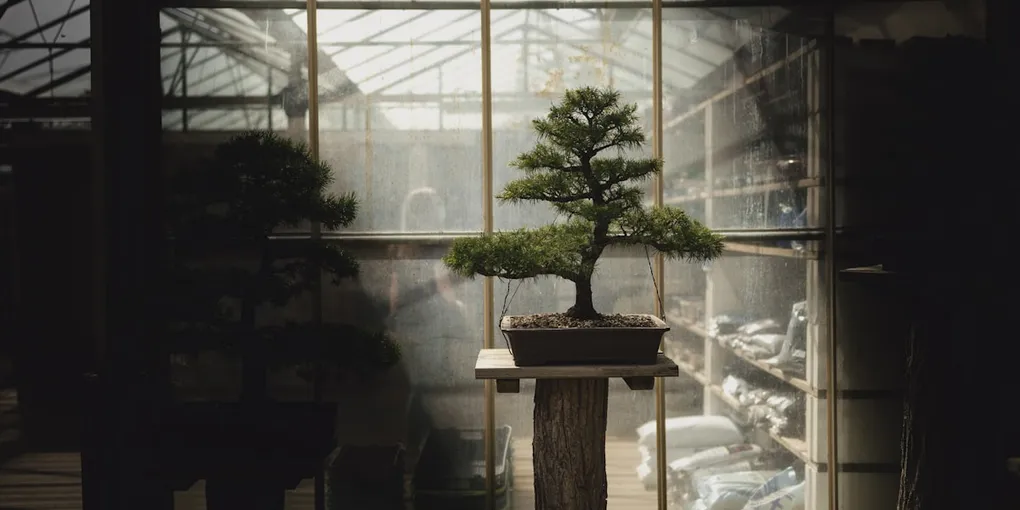
How to Care for an Indoor Bonsai Tree
Bonsai is a technique, not a species, and that distinction matters for indoor growers. Classic bonsai species like juniper and pine are outdoor trees that need a real winter dormancy to survive, and they decline indoors no matter how carefully you tend them. What’s actually sold as an “indoor bonsai” is almost always a tropical or subtropical species — Ficus retusa (also called Ficus ginseng), jade plant, or dwarf umbrella tree (Schefflera) — trained into bonsai form. The care below covers those tropical bonsai, which are what you’ll find at most garden centers.
Light
Bonsai need more light than most houseplants, not less — the shallow pot and heavily pruned canopy leave little room for the plant to compensate for a dim spot the way a larger houseplant can. Aim for bright, indirect light near a south- or east-facing window, with some direct morning sun if you can give it. See how much light do houseplants need if you’re not sure what a given window actually provides.
Watering
Check the soil daily rather than watering on a fixed schedule. The pot is shallow and the soil volume is small relative to the size of the tree, so it dries out much faster than a standard houseplant pot — in bright light or a heated room, that can mean watering every day or two. Water thoroughly until it runs from the drainage holes, then let the surface dry slightly before the next watering rather than letting the whole pot dry out the way you might with a larger houseplant.
Soil and pot
Regular potting soil holds too much water and drains too slowly for a bonsai’s shallow tray — it’s one of the fastest ways to lose the tree to root rot. Use a bonsai-specific mix (typically a blend of akadama, pumice, and lava rock, or a pre-mixed bonsai soil) that drains fast while still holding enough moisture between waterings. See best soil mix for houseplants for the general logic behind drainage, though bonsai mixes are considerably chunkier than a standard aroid or potting mix. Repotting every 2-3 years refreshes the soil and gives you a chance to trim overgrown roots — see how to repot a houseplant for the general process, keeping in mind that bonsai repotting also involves root pruning to keep the tree in its shallow container.
Humidity
Tropical bonsai species appreciate humidity above what most homes offer naturally. A humidity tray — a shallow dish of pebbles and water that the pot sits above without touching the water directly — is the standard fix and works well for a small tree without the footprint of a humidifier.
Pruning and shaping
Regular pruning is what keeps a bonsai looking like a miniature tree instead of an overgrown shrub. Pinch back new growth once it’s produced a few leaves, cutting to just above a node, to keep the canopy dense and compact. See how to prune houseplants for the general technique. Wiring branches into a specific shape is a more advanced step — wrap wire around a branch and gently bend it into position, then remove the wire after a few months once the branch has set — but it’s optional if you’re happy with the tree’s natural growth habit.
Common problems
Leaf drop is usually a watering or environment problem rather than disease. Both under- and overwatering cause it, as does a sudden change in light, temperature, or a cold draft from a door or window. Check the soil first, then consider whether the tree’s spot has changed recently.
Root rot shows up as a mushy trunk base, blackened roots, or a sudden overall wilt despite moist soil, and it’s almost always caused by soil that doesn’t drain — usually regular potting soil used in place of a proper bonsai mix, or a pot without drainage holes. Repotting into a fast-draining bonsai mix is the fix, along with trimming away any rotted roots.
Pests on a stressed tree. Bonsai that are underwatered or kept in low light become more susceptible to spider mites and scale insects than a healthy tree would be. See how to get rid of spider mites on houseplants and how to get rid of scale insects on houseplants if you spot webbing, sticky residue, or small bumps on the stems — and check the tree’s light and watering routine at the same time, since the pest is often a symptom of a stressed plant rather than the root cause.
Sparse, leggy growth on one side usually means the tree is reaching for light. Rotate the pot a quarter turn every week or two so growth stays even on all sides instead of leaning toward the window.