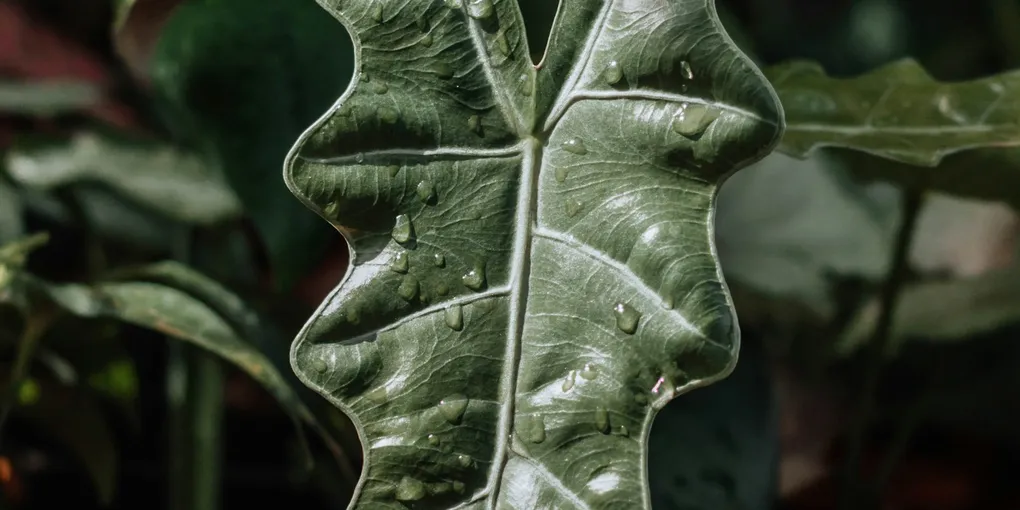
How to Care for an Alocasia Frydek
Alocasia Frydek (Alocasia micholitziana ‘Frydek’), sometimes sold as the Green Velvet Alocasia, has broad, arrow-shaped leaves with a deep matte-green, velvety texture and bright white veins that stand out sharply against the dark foliage. It’s closely related to Alocasia Black Velvet and shares much of the same care profile, but grows larger and more upright, making it a better fit for floor space than a shelf. Like other members of the Alocasia family, it has a reputation for being fussy, and humidity is the factor most likely to make or break it.
Light
Bright, indirect light keeps the leaf color rich and the white veining crisp. A spot a few feet back from a south- or west-facing window, or closer to an east-facing one, works well. Direct sun scorches the velvety leaf surface, leaving dry, bleached patches that won’t recover, while too little light leads to leggy growth and slow leaf production.
Watering
Let the top inch or so of soil dry out before watering thoroughly. Frydek sits in a narrower band than easygoing houseplants — it doesn’t want to dry out completely for long stretches, but it’s also genuinely more likely to run into trouble from soil that stays wet than from a slightly late watering. When in doubt, lean toward underwatering rather than overwatering, since a wilted plant recovers faster than a rotted one. Check the soil with a finger rather than watering on a fixed schedule.
Soil and pot
Use a loose, chunky, fast-draining aroid mix — standard potting soil holds too much water around this plant’s roots on its own. Cutting a basic mix with extra perlite or orchid bark gives roots the airflow they need. Keep the pot only slightly larger than the root ball rather than sizing up generously, since a large volume of soil holds moisture longer than the roots can use.
Humidity
This is the biggest factor in whether an Alocasia Frydek thrives or just limps along. Aim for 60% humidity or higher — noticeably more than most houseplants ask for. Crispy or curling leaf edges are usually the first sign humidity is too low. A humidifier running nearby is the most reliable fix; see how to increase humidity for houseplants for other options, since occasional misting alone won’t move the needle much for a plant this demanding.
Dormancy
Like other Alocasias, Frydek can drop all of its leaves and go dormant, especially over winter or after a stressful change in its environment. This can look like the plant has died, but the rhizome underground is often still alive. During a dormant stretch, cut back on watering significantly, keep the pot somewhere warm and stable, skip fertilizer, and be patient. See winter houseplant care for more on how houseplants generally slow down through colder months.
Toxicity
Alocasia Frydek is toxic to cats and dogs — its leaves contain calcium oxalate crystals that cause oral irritation, swelling, and drooling if chewed. Keep it out of reach of pets that like to nibble.
Common problems
Crispy or curling leaf edges point to low humidity almost every time. Raise the humidity around the plant before assuming a watering problem.
Yellowing lower leaves are usually a sign of overwatering — confirm the soil is drying out between waterings and that the pot drains freely before changing anything else.
Sudden, total leaf drop is alarming but is often dormancy rather than the plant dying, especially over winter or after a recent move. Check that the rhizome still feels firm rather than mushy before writing the plant off, and give it time before deciding it’s gone for good.
Leaf loss shortly after a move or repot is a common stress response in sensitive aroids like this one. Keep conditions as stable as possible afterward, and new growth should resume once the plant settles back in.